Obsession: How a $750K Horror Movie Became 2026's Most Surprising Box Office Hit
Blumhouse's Obsession was made for $750,000 and has crossed $44 million worldwide. Here is the full story behind the breakout horror hit, the box office numbers, and where to watch.
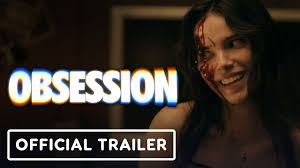
Every so often, a movie comes along that quietly rewrites the rules of how a film can succeed. In May 2026, that movie is Obsession, the new Blumhouse horror film that was made for around $750,000 and has, in less than two weeks of release, grossed more than $44 million worldwide. That is not a typo. The film is the cheapest movie to top the box office since Paranormal Activity in 2009, and the story behind the numbers is genuinely remarkable.
Here is the full picture. What Obsession is, why it caught fire, the historic context, and how to watch it.
What Obsession is
Obsession is a 2026 horror film produced by Blumhouse, the studio that has spent the past fifteen years turning a low budget, high concept model into a reliable engine of mainstream horror hits. The film was directed by Curry Barker and released theatrically in the United States on May 15, 2026.
The film is built on a single idea executed with discipline. We will not spoil the specifics for anyone going in cold, but the premise is the kind of contained, suggestive concept that the best low budget horror leans on. Less is more, dread does more work than gore, and the audience's imagination fills the gaps the budget could never have covered.
The box office story
Here is what makes the run extraordinary, in plain numbers:
- Production budget: roughly $750,000.
- Opening weekend domestic: $17.2 million, good for third place.
- As of May 21, 2026: $36.4 million domestic, $7.7 million international, $44.1 million worldwide.
- Week two domestic drop: the film actually rose roughly 16 percent in its second weekend, a result that is almost unheard of in modern horror.
That last figure is the single most telling number. Horror films almost always front load their box office, taking the biggest weekend at launch and falling sharply from there. A film that grows in its second weekend is being driven by word of mouth, not marketing, and that is the surest signal that an audience is actually loving it rather than dutifully showing up.
Why critics are loving it
Critical reception has matched the audience response. Obsession holds a 95 percent Certified Fresh rating on Rotten Tomatoes and an A minus CinemaScore from opening weekend audiences. That combination, a strong critic score and a strong opening night audience grade, is rare for horror, a genre that often splits critics and crowds in opposite directions.
What reviewers have praised most consistently is the discipline of the filmmaking. The film is built on a clear premise, sticks to it, and trusts the audience to be unsettled rather than yelled at. That is the opposite of how a lot of theatrical horror is currently being made, and it is the reason the word of mouth has been so strong.
The Paranormal Activity comparison
The most useful historical comparison for understanding Obsession is Paranormal Activity, the 2007 micro budget horror that Blumhouse founder Jason Blum first championed and that was widely released by Paramount in 2009. Paranormal Activity was famously made for around $15,000 and grossed roughly $193 million worldwide. It was the moment the modern micro budget horror model became commercially undeniable.
Obsession is the first film since to genuinely echo that pattern. It is not made for $15,000, but at $750,000 it sits in the same conceptual lineage. It also confirms that Blumhouse's core formula, give a strong filmmaker total creative control on a small budget and let the audience decide, still works seventeen years after Paranormal Activity proved it the first time.
Blumhouse's low budget model, explained
For anyone unfamiliar, here is the model. Blumhouse caps most of its productions at a few million dollars, gives directors final cut within agreed parameters, and bets on a high volume of releases knowing that a small number will become hits big enough to fund the rest. The model has produced Insidious, Sinister, Get Out, M3GAN, The Purge, and many more.
The brilliance of the model is that a film at a $750,000 budget needs roughly one million dollars in box office to be commercially viable. Anything above that is profit. Obsession will end up returning many tens of times its budget, which is the kind of math that explains why Blumhouse has the leverage it does in modern Hollywood.
Where to watch Obsession
As of late May 2026, Obsession is in cinemas. Given the box office trajectory, expect a theatrical run that extends beyond a typical horror window. A digital release usually follows roughly three to four months after theatrical for a Blumhouse hit, with a streaming home tied to one of the major services through Universal's existing distribution deals.
If you can, see it on the big screen. A horror film that the audience around you is actually engaging with is a different experience from streaming it alone on a Tuesday night.
If you like Obsession, watch these next
- Paranormal Activity (2007), the direct spiritual ancestor of this kind of micro budget horror hit.
- Get Out (2017), a later Blumhouse phenomenon that pushed the model into Oscar territory.
- It Follows (2014), for the same restraint and dread first instincts.
- Talk to Me (2023), another low budget horror that broke out hard on word of mouth.
The Blumhouse playbook, explained
To understand Obsession, you have to understand the studio behind it. Blumhouse Productions was founded by Jason Blum in 2000, and it spent its first decade as a relatively small operation. The Paranormal Activity success in 2009 became the proof point for a model the company has spent the years since refining and scaling.
The core rules of the model are simple. Cap the budget aggressively, usually under five million dollars. Give the director final cut within agreed parameters. Take risks on filmmakers who do not yet have a track record at scale. Release widely. Accept that most projects will not break out, knowing that the ones that do, like Get Out, Insidious, The Purge, M3GAN, and now Obsession, will return many times their cost. The math works because horror travels well, the audience tolerates rough edges if the central idea is strong, and the genre rewards risk in a way most others do not. Obsession is the model performing exactly as designed.
Why low budget horror keeps producing breakout hits
Look at the highest grossing horror films of the last fifteen years on a return on investment basis, and the pattern is unmistakable. The Blair Witch Project, Paranormal Activity, Get Out, Saw, The Purge, M3GAN, Talk to Me, and now Obsession all share a basic structural insight. Horror does not need spectacle to land. It needs an idea, a tone, and a willingness to trust the audience.
That makes low budget horror the most efficient corner of mainstream cinema. A modest film with a great premise can outperform expensive ones not by trying to match their scale, but by leaning into the freedom the smaller budget provides. Obsession's run is the latest proof, and it is the kind of result that will keep the genre's micro budget tradition alive for the next generation of filmmakers.
What the 16 percent week two rise actually means
Box office watchers know that horror typically experiences the steepest week two drop of any major genre. A film that opens to fifty million dollars often lands closer to fifteen million in its second weekend, a fall of roughly seventy percent. The genre's audience is front loaded by design, and the drop is normally severe enough to make week two a financial sigh of relief rather than a triumph.
For a horror film to actually grow in its second weekend is almost unheard of. It signals that the audience that did not see it on opening night is now being convinced by friends, family, and social media. That kind of organic growth is the most valuable thing a film can have, because it tends to extend the entire theatrical run. It is the closest a movie can come to free advertising at scale, and it is why Obsession is being treated by the industry as a real phenomenon rather than a one weekend story.
Frequently asked questions about Obsession
How much did Obsession make at the box office?
As of late May 2026, the film has grossed roughly $36.4 million domestic and $44.1 million worldwide, after opening on May 15.
Who directed Obsession?
Curry Barker directed the film. Blumhouse produced.
Is Obsession actually scary?
Word of mouth has been emphatic. A 95 percent Rotten Tomatoes score and an A minus CinemaScore from opening night audiences both suggest the film delivers on the genre.
When will Obsession be on streaming?
No date has been announced. Based on the typical Blumhouse digital window, expect a home release roughly three to four months after the theatrical opening.
For more on what is opening at the cinema and where to stream it later, browse our movie news and guides, or head to The Movies Finder to find your next watch.
The Movies Finder · Discover
Find what you'll actually love next.
Filter by mood, platform, and era · or roll the reels and let one pick find you.
Find your next watchGet Weekend Watch Picks
Join thousands of movie lovers. Get curated recommendations every Friday. Skip the scroll, start watching.
No spam. Unsubscribe anytime. We respect your inbox.
Read next
More from the blog.


Discussion
Sign in to join the discussion.
Loading comments…