Fjord Wins the Palme d'Or 2026: Inside Cristian Mungiu's Cannes Triumph with Sebastian Stan
Fjord, written and directed by Cristian Mungiu, won the Palme d'Or at Cannes 2026. Here is what the film is about, who is in the cast, why this is Mungiu's second Palme, and when you will be able to watch it.
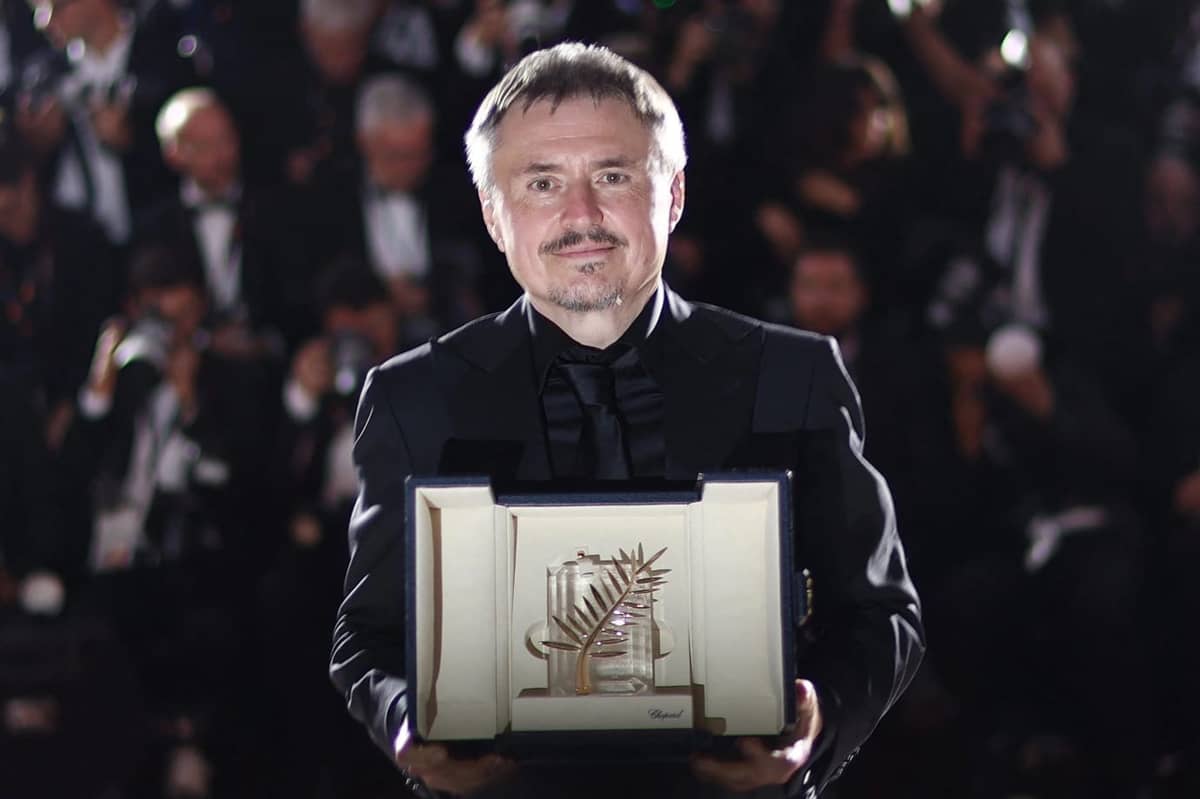
The 2026 Cannes Film Festival ended with the highest prize in world cinema going to a quietly devastating drama about marriage, migration, and the limits of liberal tolerance. Fjord, the new film from Romanian director Cristian Mungiu, won the Palme d'Or. It is the second time he has taken the festival's top award, and the win has put the film at the top of every serious moviegoer's watch list for the rest of 2026.
Here is the full picture. What Fjord is, who is in it, why the win matters, and where you will be able to see it.
What Fjord is
Fjord is a drama written, co-produced, and directed by Cristian Mungiu. It had its world premiere in the main competition at Cannes on May 18, 2026, and won the Palme d'Or at the festival's closing ceremony on May 24.
The film follows a Romanian-Norwegian couple who move from a cosmopolitan city to the wife's small, progressive hometown on a remote Norwegian fjord. The husband holds traditional, conservative views. The wife's community holds the opposite. What looks at first like a story about cultural friction quietly turns into something darker, a study of how a community polices belief when the people around it stop pretending to agree. Mungiu has never made an easy film, and Fjord is no exception.
The cast
The two leads anchor the entire film. Sebastian Stan plays the Romanian husband. Stan, best known internationally for his work in the Marvel Cinematic Universe and for an Oscar nominated turn in A Different Man, is in a strikingly different register here. Opposite him is Renate Reinsve as the Norwegian wife, the actress who broke through with The Worst Person in the World in 2021 and has since become one of the most quietly powerful presences in European cinema.
The supporting cast is largely Norwegian, including Markus Tonseth, Lisa Loven Kongsli, Jonathan Ciprian Breazu, Henrikke Lund Olsen, Vanessa Ceban, and Lisa Carlehed. The result is a film grounded in a specific place, with a specific language and rhythm, rather than a generic European setting.
Cristian Mungiu, and why a second Palme matters
Cristian Mungiu first won the Palme d'Or in 2007 for 4 Months, 3 Weeks and 2 Days, his harrowing drama about an illegal abortion in Ceausescu's Romania. That film redrew the map of Eastern European cinema almost single handed and established Mungiu as one of the most exacting filmmakers working anywhere.
Winning a second Palme is rare. The list of directors who have done it is short, and joining it places Mungiu in the company of names like the Dardenne brothers, Ken Loach, Michael Haneke, and Bong Joon ho. The award is not just for Fjord. It is the festival quietly confirming that Mungiu's slow, demanding, deeply moral filmmaking is one of the defining bodies of work of his generation.
The Cannes context: Neon's seven year run
Fjord was acquired for North American distribution by Neon, and the win extends a remarkable streak. Neon has now distributed the Palme d'Or winner seven years in a row, an unprecedented run that includes Parasite, Titane, Triangle of Sadness, Anatomy of a Fall, and Anora. A single distributor lining up with the Cannes jury for that long is not luck. It is a clear bet on a certain kind of cinema, and it keeps paying off.
For audiences, that consistency is useful. If you have liked the recent Palme winners, Fjord lands in the same lineage.
Where to watch Fjord
As of late May 2026, Fjord has only screened at Cannes. A theatrical release window has not been confirmed, but a Neon Palme d'Or winner follows a predictable pattern. Expect a limited United States theatrical run in late 2026, expanded into a wider release if word of mouth holds, and a digital release roughly three to four months after that. International release dates will vary by territory.
If you want to be one of the first to see it, follow Neon's release calendar through the autumn. If you are happy to wait, the home release will land in early 2027 in most markets. We will update our blog as the schedule firms up.
Mungiu's other films, ranked for newcomers
If Fjord is your first encounter with Cristian Mungiu, here is the order most viewers find rewarding:
- 4 Months, 3 Weeks and 2 Days (2007) is the essential starting point. His first Palme winner, and one of the great films of the 21st century.
- Beyond the Hills (2012) is a brutal, hypnotic two hander set in a remote Romanian monastery.
- Graduation (2016) is his most accessible film, a slow burn about a father trying to fix his daughter's future in a country that no longer rewards honesty.
- R.M.N. (2022) is the most direct thematic predecessor to Fjord, a clear eyed look at small town xenophobia in Transylvania.
Why Fjord is worth the wait
A Palme d'Or does not automatically mean a film will land for every viewer. What it does mean, almost without exception, is that the film is a serious piece of work made by a director operating at the top of their craft. Mungiu's films are demanding. They are also among the most rewarding dramas anyone is making.
If you have ever finished a film and thought about it for days, Fjord is being made for you. Sebastian Stan working with one of the great European directors of his generation, opposite Renate Reinsve in arguably her most challenging role to date, is the kind of pairing that justifies the trip to the cinema by itself.
Sebastian Stan's pivot to European auteurs
Fjord is the most visible recent example of a quiet pattern in Sebastian Stan's career. The actor most casual viewers associate with the Marvel Cinematic Universe and a steady stream of mid budget thrillers has, over the last few years, been deliberately reshaping the kind of work he takes.
The shift started becoming undeniable around the time of A Different Man, the dark dramedy that earned him his first major awards conversation. Stan's read of that role, restrained and unsentimental, was the closest his career had come to the kind of performance European auteurs build films around. Fjord is the logical next step. Working with Cristian Mungiu, opposite an actress of Renate Reinsve's calibre, in a film deliberately scaled for the festival circuit rather than the multiplex, is the kind of choice American movie stars do not usually make at the peak of their commercial value. The fact that it has paid off with a Palme d'Or is the most decisive confirmation yet that the pivot is working.
The Norwegian setting, and why it shapes the film
The choice to set Fjord in a remote Norwegian community is not decorative. The setting is the engine of the entire story. Norway functions in the international imagination as a kind of liberal democratic ideal, an orderly society where progressive values are widely shared and dissent is rare. Mungiu's film puts pressure on that image without ever directly attacking it.
The wife's hometown is presented as exactly the kind of community we are told Norway produces, decent, well meaning, attentive to its values. The arrival of an outsider who genuinely disagrees with those values, and refuses to mask the disagreement, forces the community to decide what tolerance actually is, and where its limits sit. The fjord itself, vast and indifferent in the background of nearly every scene, becomes the perfect visual metaphor for a story about beauty and isolation that turn out to be closely related.
The 2026 Cannes festival in wider context
Fjord did not win in isolation. The 2026 Cannes Film Festival was a particularly strong year for serious world cinema, with Neon's seventh consecutive Palme win arriving in a competition crowded with high profile names. The critical conversation around the lineup was unusually loud even by Cannes standards, and the jury's choice arrived in a field that gave it real competition.
That context matters. Mungiu did not win against weak opposition. He won against a stacked field, and the jury's choice was the festival's clearest statement of where serious cinema is right now.
Frequently asked questions about Fjord
When does Fjord come out?
A precise theatrical date has not been announced. Based on Neon's typical pattern with Palme d'Or winners, expect a limited United States release in late 2026, with home viewing options in early 2027. International windows will vary.
Is Fjord in English?
The film is primarily in Norwegian and Romanian, with subtitles. That is part of what makes the cultural setting feel so specific.
Is Sebastian Stan good in Fjord?
Early Cannes coverage has been strongly positive on his performance, calling it some of his most committed work outside the blockbuster space. The film deliberately leans on the contrast between his earlier persona and the role.
Do I need to have seen Mungiu's earlier films?
No. Fjord is a standalone story, fully understandable on its own. His earlier films deepen the experience but are not required.
For more on what is worth watching as the awards calendar moves toward the end of the year, browse our movie news and guides, or head to The Movies Finder to find your next watch tonight.
The Movies Finder · Discover
Find what you'll actually love next.
Filter by mood, platform, and era · or roll the reels and let one pick find you.
Find your next watchWritten by
Maya TorresStreaming-news editor at The Movies Finder. Covers Netflix originals, prestige drama, and the weekly best-of lists.
Get Weekend Watch Picks
Join thousands of movie lovers. Get curated recommendations every Friday. Skip the scroll, start watching.
No spam. Unsubscribe anytime. We respect your inbox.
Read next
More from the blog.


Discussion
Sign in to join the discussion.
Loading comments…